What Does “Enby” Mean? Definition, Origins & How It’s Used (2026)
Updated: January 2026
What does “enby” mean? You may have seen the word enby on social media bios, TikTok videos, or in conversations about gender identity. However, many people often don’t know where the term comes from or how it’s used.
Quick definition: Enby (pronounced en-bee) is a colloquial term derived from “N.B.” (non-binary). It’s used by some non-binary people as an identity label or community shorthand, especially in online and queer spaces. Not all non-binary people use the term, and preferences vary.
Enby is more than just internet slang. For many gender diverse people, it’s a term of self-expression, belonging, and joy. For others, it can feel unfamiliar, even uncomfortable. And that’s okay. Language, like gender, is constantly evolving.
In this post, we’ll explore the meaning of enby. Where does the term enby come from? How do people use enby? And, the range of perspectives within the non-binary community.
Whether you’re questioning your own identity, learning to support someone in your life, or simply curious, this is your guide to understanding the origins, context, and conversations around “enby.”
Transparency matters. We may display ads or affiliate links to support our work. Read our Disclosure Policy to learn more.
The Origins of “Enby” for Non-Binary
The term enby might feel new, but it’s been in queer vernacular for over a decade. It stems from the abbreviation “N.B.” for non-binary, a term used to describe genders outside the male-female binary. But since “N.B.” was already widely recognised as shorthand for “non-Black” in race-based conversations, many in the queer community sought a clearer alternative. Spelt out phonetically, “N.B.” became “enby.”
Enby began gaining traction in the early 2010s, especially on platforms like Tumblr and LiveJournal, digital spaces instrumental in shaping modern queer identity and vocabulary. These platforms were havens for people questioning their gender, offering the freedom to explore language that felt more honest and less clinical than what was found in mainstream media or academic texts.
What made enby stick was its softness and accessibility. It gave people, especially younger folks, an approachable way to describe their gender without needing to define it by what it isn’t. Unlike technical terms like genderqueer or agender, enby felt playful, community-made, and personal. Institutions didn’t impose it. It was grown online, in spaces where non-binary people were trying to find themselves and each other.
How “Enby” Is Used Today
Language isn’t static, and enby has evolved with the people who use it. Today, you’ll find the term everywhere, from TikTok bios and Discord usernames to mutual aid zines and online support groups. For some, enby is a central identity label. For others, it’s more of a vibe: soft, fluid, and outside the binary.
The word often carries a tone of care, kinship, and playfulness, especially among younger queer people. It can also signal alignment with particular aesthetics or values, like anti-capitalism, mutual aid, or DIY fashion. In that sense, enby is not just a gender label, but a cultural shorthand for a way of being in the world.
That said, not everyone who is non-binary uses the word enby, and that’s completely valid. Some find it too casual, too youthful, or too tied to internet culture. Others embrace it precisely because it feels like community-created language, not something academic, medicalised, or gatekept.
As enby has become more visible in mainstream conversations, some backlash has emerged, especially in transphobic or anti-queer corners of the internet. But among those who use it intentionally, enby remains a tool for expression, liberation, and connection.
How People Use “Enby” in Real Life
For many people, how and when they use the word enby depends on context.
Some use enby casually with friends or in queer community spaces, but prefer non-binary in professional or formal environments. Others use enby as a self-descriptor online while choosing a different term offline. And some people don’t use the term at all, even though they’re non-binary, because it simply doesn’t feel like a fit.
There’s no single “right” way to use the word. What matters is that people have the freedom to choose language that feels authentic to them and the space to change it over time.
How Do You Pronounce and Pluralise “Enby”?
Enby is pronounced “en-bee”, just like saying the letters N and B out loud.
The plural form is enbies, not enbys. For example:
“Many enbies find community online.”
The word can be used as both a noun (“I’m an enby”) and an adjective (“an enby artist”), depending on context. As with most identity languages, flexibility and respect matter more than rigid grammar rules.
Is “Enby” Offensive? Community Perspectives
Like many identity terms, enby sparks debate, even within the queer community. For some, it’s affirming, empowering, and joyful. For others, it can feel infantilising, cutesy, or overly casual. So… is enby offensive?
The short answer: it depends on who you ask.
Some non-binary people dislike the term because it sounds like “baby” or “bambino,” and feels dismissive of their adult experience or seriousness. Others worry it lacks the political weight of terms like trans, genderqueer, or agender, especially in contexts like activism or healthcare. There's also concern that enby can be co-opted by brands or media in a way that flattens the complexity of non-binary identities.
On the flip side, many embrace enby because of its softness, accessibility, and community-made feel. It’s a word that wasn’t handed down from academia. It was created, adapted, and shared by people carving out space in a gendered world. Some even reclaim the cutesy tone on purpose, using it as a playful act of resistance in a society that refuses to take non-binary people seriously.
What matters most is context and consent. If someone calls themselves an enby, respect that term. If they don’t like it, respect that too. Identity is personal, and the way we speak about it should reflect care, curiosity, and consent.
When Might It Be Better Not to Use the Word “Enby”?
While enby is affirming and meaningful for many people, there are situations where it may not be the best or most appropriate term.
In professional, legal, or medical settings, more formal language, such as non-binary, is often more straightforward and more widely understood. Using precise terminology can help avoid confusion, especially in contexts involving documentation, policy, or healthcare decisions.
It’s also important not to assume someone uses the word enby. Even if a person is openly non-binary, they may prefer a different language to describe themselves. When in doubt, follow their lead or ask respectfully.
Finally, some people choose not to use enby at all because it doesn’t resonate with their sense of self. Avoiding the term in these cases isn’t about being “correct”, it’s about being considerate. As with all identity language, the most respectful choice is the one that centres consent and context.
Enby & Non-Binary: What’s the Difference?
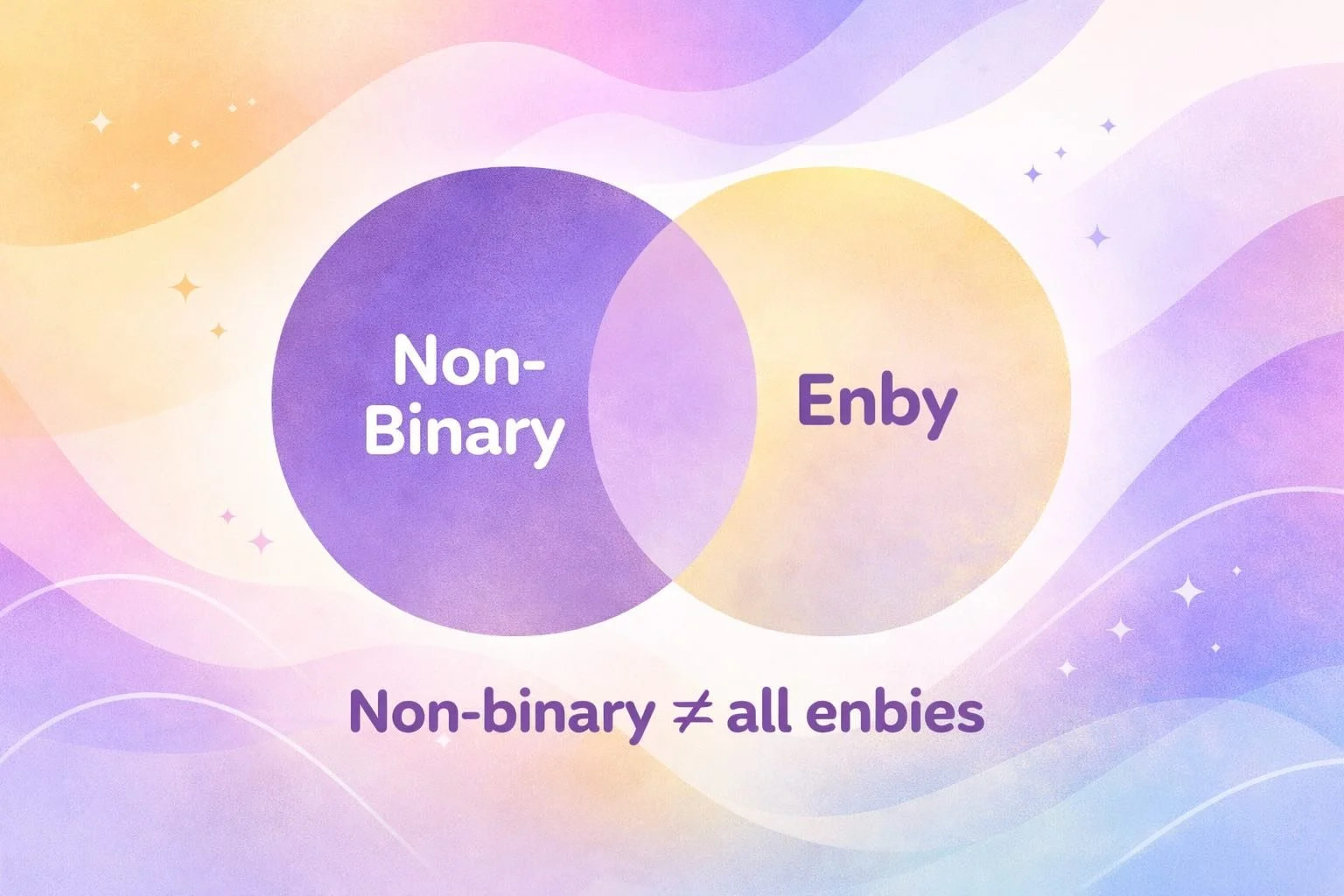
At first glance, enby and non-binary might seem interchangeable, but they’re not always used the same way, and they don’t mean the same thing.
Non-binary is an umbrella term for anyone whose gender identity exists outside the traditional categories of male and female. It includes identities like genderqueer, agender, bigender, genderfluid, and more. It’s a term commonly used in medical, academic, and legal contexts, and it often carries a tone of formality and inclusivity.
Enby, on the other hand, is a more casual, colloquial identity label. It’s a specific way some people express their non-binary identity, especially in community and online spaces. While all enbies are non-binary, not all non-binary people call themselves enbies.
Think of it like this:
Non-binary is the category.
Enby is one of many ways to live and describe that experience.
Some people use enby because it feels warm, soft, and affirming. Others avoid it because it feels too informal for how they see themselves, or it doesn’t resonate. Both choices are valid.
In short, the difference lies in tone, context, and personal identity. The key is to use the language someone uses for themselves, and to honour that with care and respect.
Frequently Asked Questions About “Enby”
-
Not exactly. Non-binary is an umbrella term for genders outside male and female. Enby is a more casual term some people use to describe their non-binary identity. While many enbies are non-binary, not all non-binary people use the word enby.
-
For some people, no, it feels affirming, playful, and community-made. For others, it can feel infantilising or too casual. Like most identity language, what matters is context and consent. Use the language someone uses for themselves.
-
Cis people should generally avoid labeling others as enby unless that person has explicitly used the term for themselves. It’s best used as self-identification or within affirming, informed contexts.
-
Enby emerged in online queer spaces, but it’s now used offline as well in community groups, friendships, and everyday language. Still, it remains more informal than terms like non-binary, especially in professional or legal settings.
The word enby may be short, but it holds multitudes. It’s a reminder that gender isn’t binary, that language evolves with us, and that we deserve words that feel like home. Whether you use enby proudly, avoid it altogether, or are just learning about it for the first time, what matters most is respect: for yourself and for others.
We’re all navigating identity in a world not built for us. So let’s make something better together.
New to non-binary identity? Start here
If this article helped, these guides can support you next:
Enjoyed this read?
Follow Enby Meaning for more. Subscribe, share, and check out a few posts that connect to this one ↓